
Aug
Legal
Massachusetts Kratom Schedule I Ban: 7 Essential Steps for Reliable B2B Compliance
The Massachusetts kratom Schedule I ban creates an immediate compliance issue for importers, distributors, wholesalers, and overseas suppliers serving the state. The emergency action temporarily places all forms of kratom into Schedule I under Massachusetts law, following a 14-day notice period, and may remain in place for up to one year. B2B businesses should stop treating Massachusetts as a routine destination and review every active shipment, customer account, and supply agreement connected to the state.
For exporters, the central risk is not simply lost sales. It is sending goods into a market where state-level controls may affect retail distribution, warehousing, fulfillment, marketing, and commercial possession. Businesses should obtain Massachusetts legal advice before accepting, releasing, or rerouting orders destined for Massachusetts.
Table of Contents
Massachusetts Kratom Schedule I Ban: What B2B Companies Need to Know
The Massachusetts action reportedly applies broadly to kratom products rather than only a narrow category of concentrated products. That distinction is critical for B2B operators that carry leaf powder, capsules, extracts, blends, private-label products, or raw material intended for further processing.
The Commonwealth has publicly announced action concerning kratom products through its official government channels. Buyers and suppliers should monitor the Massachusetts government announcement on kratom action and seek the current text of the applicable order before making compliance decisions.
A temporary classification does not mean a company can wait for a final long-term rulemaking process. Once effective, an emergency order can require immediate changes to commercial operations. A Massachusetts kratom Schedule I ban therefore requires a documented response before inventory moves through the supply chain.
7 Essential B2B Compliance Steps
- Freeze new Massachusetts-bound orders. Pause acceptance and fulfillment of orders shipped to Massachusetts until qualified legal counsel confirms what is permitted.
- Identify inventory already in transit. Review shipments held by freight forwarders, customs brokers, warehouses, carriers, and third-party logistics providers.
- Audit customer delivery addresses. Screen not only billing locations but also ship-to addresses, warehouse locations, and drop-shipping destinations.
- Review distributor contracts. Check clauses covering regulatory change, product withdrawal, refusal of delivery, returns, force majeure, and payment obligations.
- Update product controls. Ensure product codes, certificates of analysis, shipping instructions, and warehouse systems can flag Massachusetts restrictions.
- Communicate with commercial partners. Provide factual notices to distributors and logistics providers without making unsupported legal assurances.
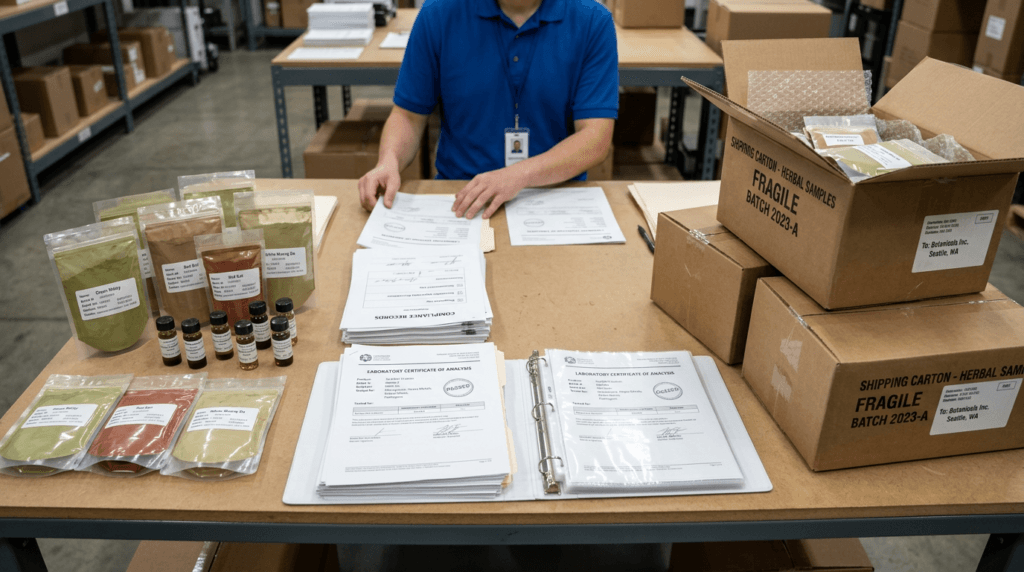
- Create a written compliance record. Maintain records of order holds, customer notices, rerouting decisions, and legal guidance received.
Inventory and Shipment Controls for Importers
For an importer, the Massachusetts kratom Schedule I ban should trigger an inventory-location review. Goods may be physically outside Massachusetts but still committed to a Massachusetts buyer, stored at a regional fulfillment center, or listed for automatic delivery through an online wholesale portal.
Start by separating inventory into three groups: goods already delivered in Massachusetts, goods in transit to Massachusetts, and goods that could be shipped there through future orders. This helps operations teams avoid accidental release of restricted products through automated fulfillment rules.
Companies importing kratom into the United States should also distinguish federal import procedures from Massachusetts commercial restrictions. A shipment’s ability to clear federal entry procedures does not by itself establish that it may be distributed or sold in a particular state. Product-specific state restrictions must be reviewed separately.
Overseas suppliers should ask U.S. customers for written destination controls. A purchase order from a distributor located outside Massachusetts may still create exposure if the intended distribution territory includes Massachusetts. The supplier should require buyers to disclose the final market and confirm responsibility for local regulatory compliance.
Distributor and Wholesaler Contract Implications
The Massachusetts kratom Schedule I ban can affect payment disputes, returned stock, unsold inventory, and exclusivity arrangements. B2B contracts should be reviewed before either party assumes that existing obligations continue unchanged.
Key questions include whether the buyer can reject product after a regulatory change, who bears freight and storage costs, whether stock can be rerouted, and whether a supplier must issue credit for unopened inventory. The answers depend on contract language, delivery terms, governing law, and the specific facts of the transaction.
For future supply agreements, wholesalers may consider adding clear provisions covering:
- State-by-state destination restrictions and buyer representations;
- Supplier authority to suspend fulfillment where legality is uncertain;
- Procedures for regulatory notices and customer communications;
- Allocation of costs for recalls, returns, storage, or rerouting;
- Requirements to provide accurate product and destination records.
These provisions should not be used as a substitute for legal review. They can, however, reduce confusion when an order is affected by a sudden state-level regulatory action.
Quality Documentation Still Matters
Compliance with the Massachusetts kratom Schedule I ban is separate from ordinary quality assurance, but buyers should continue maintaining complete product documentation. Certificates of analysis, batch records, specifications, traceability records, and accurate commercial invoices remain important for managing inventory and responding to customer questions.
For exporters, reliable documentation also supports efficient rerouting when a destination market changes. A distributor may need to redirect stock to another lawful market, and clear lot identification reduces the risk of mixing inventory, duplicating shipments, or losing batch traceability.
Borneohale works with B2B buyers that require professional documentation and supply-chain communication for bulk kratom procurement. Visit Borneohale’s B2B kratom supply page to discuss product specifications, export documentation, and destination-market requirements.
How Suppliers Should Communicate With Massachusetts Customers
A professional notice should be short, factual, and non-speculative. Do not tell customers that possession, online sales, interstate delivery, or a particular product format is permitted or prohibited unless that position has been confirmed by qualified Massachusetts counsel and the applicable official order.
Instead, state that the company is reviewing the Massachusetts kratom Schedule I ban, has temporarily paused affected orders where appropriate, and will provide an update when it has verified the operational requirements. This approach protects commercial relationships while avoiding inaccurate legal claims.
Suppliers should also avoid presenting community commentary as regulatory guidance. Some buyers and industry observers have expressed uncertainty about the reach of the action, particularly regarding traditional leaf products, online sales, and concentrated formats. Those questions require answers from official materials and legal professionals, not informal discussion.
Preparing for a One-Year Temporary Restriction
If the temporary classification remains in effect for its full possible duration, B2B companies may need a longer-term Massachusetts market plan. This could include removing the state from sales territories, revising distributor forecasts, reallocating inventory, and adjusting production schedules.
Importers and manufacturers should not assume that a temporary measure will automatically expire without further action. Track official Massachusetts updates, preserve compliance records, and regularly reassess customer exposure. The Massachusetts kratom Schedule I ban may also affect how other state buyers evaluate their own regulatory risk.
FAQ
Does the Massachusetts kratom Schedule I ban affect overseas suppliers?
Yes. Exporters can face commercial and compliance risk if they supply a U.S. buyer that distributes products into Massachusetts. Suppliers should verify final destinations and pause affected shipments when necessary.
Should distributors stop accepting Massachusetts orders?
Distributors should obtain Massachusetts legal advice and review the current order immediately. Pending that review, pausing Massachusetts-bound fulfillment is a prudent risk-control measure.
Does federal import clearance mean kratom can be sold in Massachusetts?
No. Federal import procedures and state-level distribution rules are separate issues. A product that enters the United States may still face restrictions in a specific state.
What documents should wholesalers retain?
Keep purchase orders, invoices, batch records, certificates of analysis, ship-to addresses, carrier records, customer notices, and documentation of any order hold, return, or rerouting decision.
Can a supplier reroute inventory intended for Massachusetts?
Possibly, but only after confirming contractual rights, product traceability, destination-market legality, and any warehouse or carrier requirements. Do not redirect stock without documented approval and compliance review.
Discover more from Borneohale
Subscribe to get the latest posts sent to your email.

You may also like these articles…
Recipe
How to Make Kratom Tea (Hot and Iced) Like an Artisan
Kratom is a multipurpose plant that originated in Southeast Asia and has grown in popularity[Read More]
Read MoreGuide
How to Avoid and Taper Down Kratom Tolerance
If allowed untreated, kratom tolerance can develop. Although dependence is a rare occurrence, it is[Read More]
Read MoreBest Seller Product
Kratom
Green Kratom Powder
Kratom
Red Kratom Powder
Kratom
White Kratom Powder