
Aug
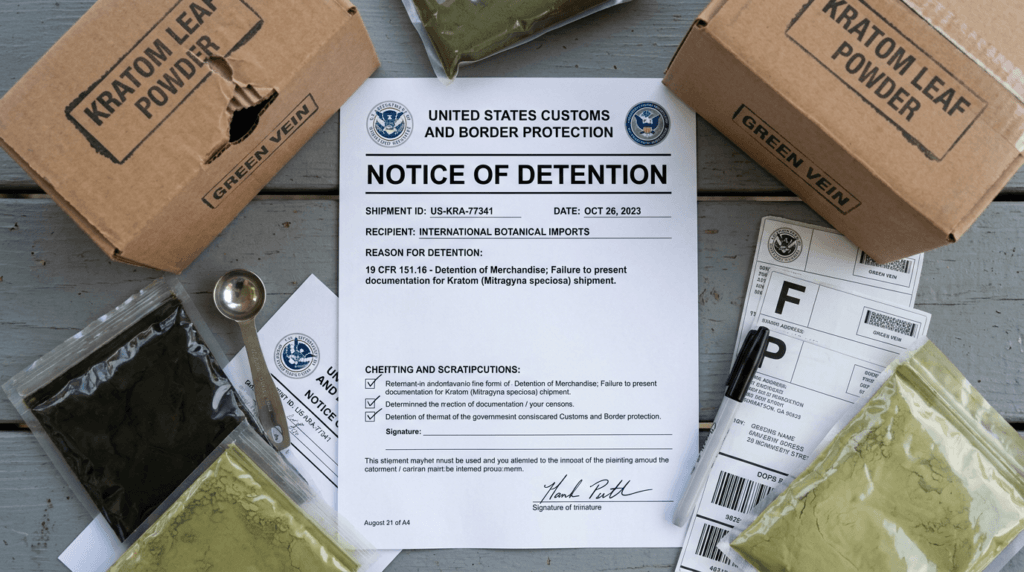
Kratom legal in the Netherlands — yes, under narcotics law. But a 2025 court ruling adds a second, more consequential layer: Dutch food safety authorities can detain kratom shipments as an unauthorized novel food, even though kratom itself is not banned. For B2B buyers, this is the most important nuance in the Dutch market, and one that’s easy to miss if you only check narcotics scheduling.
This guide breaks down what actually happened in the 2025 ruling, why the case is directly relevant to bulk B2B shipments, and what buyers should verify before importing into the Netherlands.
Table of Contents
Why Kratom Legality in the Netherlands Matters to B2B Buyers
The Netherlands illustrates a pattern that applies across Europe: a country can leave kratom completely unscheduled under narcotics law and still restrict it through a separate legal mechanism. For B2B buyers, checking only whether kratom is a controlled substance is not enough to assess Dutch market risk — the food-safety pathway matters just as much.
For a broader view of how the Netherlands compares to other European markets, see our guide to European kratom regulations.
6 Critical Facts About Kratom Legality in the Netherlands
These six facts summarize the Netherlands’ current legal position on kratom, based on primary legislative and court sources as of mid-2026.
1. Kratom is not a controlled substance under the Opium Act
Kratom is not listed under the Dutch Opium Act (Wet van 12 mei 1928), so it is not officially classified as a narcotic drug. From a pure narcotics-law standpoint, kratom is legal to possess, sell, and import in the Netherlands.
Sale is restricted to adults 18 and older, and kratom cannot be advertised as a medical product. Beyond that, narcotics law places no specific restriction on kratom.
2. A 2025 court ruling changed the risk picture
In June 2025, the Dutch Trade and Industry Appeals Tribunal (CBb) ruled that kratom is correctly classified as an unauthorized novel food under EU Regulation 2015/2283 (ECLI:NL:CBB:2025:340). Under this regulation, any food ingredient without a documented history of significant consumption in the EU before 15 May 1997 requires authorization before it can be marketed as food — kratom does not have that authorization.
This ruling did not change narcotics law. It established a separate, food-safety basis on which Dutch authorities can act against kratom shipments.
3. The ruling upheld detention of a 1,100 kg commercial shipment
The CBb case wasn’t abstract: it upheld the Dutch food safety authority’s (NVWA) detention of a 1,100 kg kratom import shipment. That volume is directly comparable to typical B2B bulk orders — this is not a scenario limited to small personal-use quantities.
For buyers working with bulk minimum order quantities, this precedent is directly relevant, not a theoretical edge case.
4. “Not for human consumption” labeling is not a guaranteed defense
Novel food enforcement is based on how a product is classified at import, not solely on how it’s labeled for retail sale. A “not for human consumption” label — which supports compliance under narcotics and general product law in markets like Germany and Spain — does not automatically resolve a novel food classification issue in the Netherlands.
This is a meaningful distinction: buyers should not assume labeling compliance that works in other markets automatically extends to Dutch novel food risk.
5. Enforcement is active, not just theoretical
The CBb ruling reflects an active enforcement posture, not a dormant rule. The NVWA physically detained a real commercial shipment and defended that action through appeal, with the tribunal upholding it. This is a legal position Dutch authorities have already tested and won — not a hypothetical risk.
6. What this means for B2B buyers
Kratom remains legal to import into the Netherlands under narcotics law, and many shipments continue to move without incident. But given the CBb precedent, buyers planning bulk shipments should verify their import pathway and intended product classification in advance, rather than assuming labeling alone resolves the risk.
Buyers sourcing from a supplier with clear, lab-verified export documentation are better positioned to have that conversation with their own advisors — see Borneohale for export credentials and batch documentation.
Commercial Risks of Non-Compliance in the Dutch Market
The financial exposure here is concrete, not hypothetical. A detained shipment ties up capital and inventory while a resolution is sought, and the CBb ruling shows Dutch authorities are willing to detain shipments and defend that decision through appeal. Buyers who treat the Netherlands as risk-free simply because kratom is unscheduled under narcotics law are working from an incomplete picture.
That gap is largest for exactly the bulk-volume shipments most B2B buyers actually place — the 1,100 kg detained shipment in the CBb case sits squarely in typical wholesale order territory.
Build a Compliance Checklist for the Dutch Market
Before committing to a large shipment into the Netherlands, confirm the intended import classification and pathway, keep documentation demonstrating product specifications and lab verification on hand, and consider consulting Dutch legal counsel for shipments at scale, particularly first-time bulk orders.
Revisit this checklist alongside your regular European market review, and immediately after any further Dutch court or regulatory activity involving kratom.
FAQ: Kratom Legality in the Netherlands for B2B Buyers
Is kratom legal in the Netherlands?
Kratom is not a controlled substance under the Dutch Opium Act, so it isn’t classified as a narcotic. However, a 2025 court ruling classified it as an unauthorized novel food, creating a separate risk for import shipments.
What is the CBb ruling and why does it matter?
In June 2025, the Dutch Trade and Industry Appeals Tribunal (CBb) ruled that kratom is an unauthorized novel food under EU Regulation 2015/2283, upholding the detention of a 1,100 kg commercial shipment. It matters because it shows Dutch authorities can and do act against bulk kratom imports on food-safety grounds, separate from narcotics law.
Can Dutch customs seize a legal kratom shipment?
Yes. Because kratom can be classified as an unauthorized novel food, Dutch food safety authorities (NVWA) can detain shipments even though kratom is not a controlled substance under narcotics law.
Does “not for human consumption” labeling protect against novel food enforcement?
Not necessarily. Novel food classification relates to how a product is categorized at import, not just its retail labeling. Buyers should not assume labeling used in other markets automatically resolves Dutch novel food risk.
Should I stop shipping kratom to the Netherlands?
Not necessarily — kratom remains legal under narcotics law and many shipments move without incident. But B2B buyers, especially those placing bulk orders, should verify their import pathway and consider legal guidance before committing to large shipments.
Discover more from Borneohale
Subscribe to get the latest posts sent to your email.

You may also like these articles…
Guide
Green Maeng Da Effects: Phenomenal and Friendly for New Users
Green Maeng Da effects are phenomenal. It is one of the safest antidepressant plants, and[Read More]
Read MoreLegal Wholesale
European Kratom Regulations: 7 Critical Facts for B2B Buyers and Importers
European kratom regulations are fragmented across 32 countries, with no unified European Union law governing[Read More]
Read MoreBest Seller Product
Kratom
Green Kratom Powder
Kratom
Red Kratom Powder
Kratom
White Kratom Powder